Semear Presbyterian Church
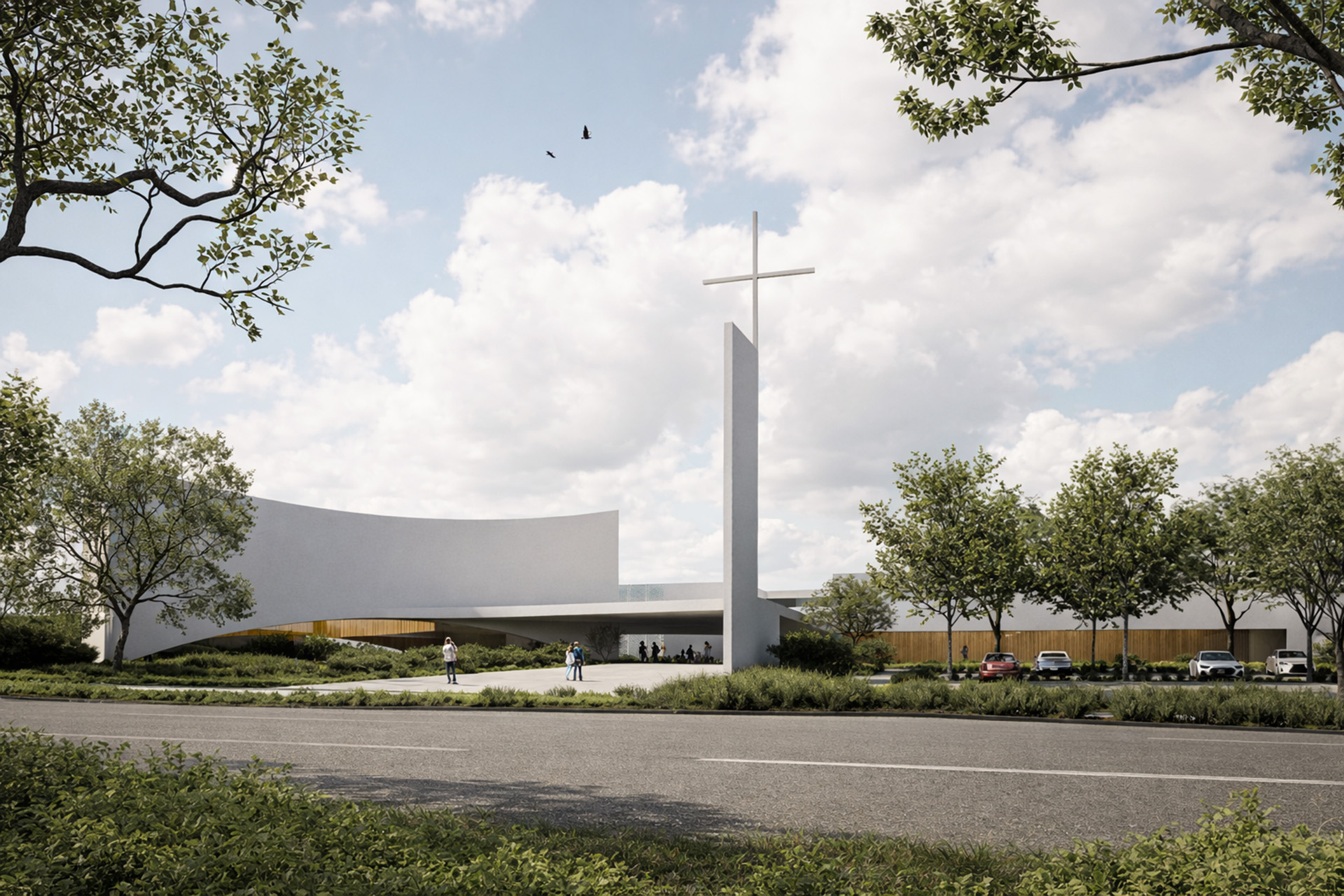
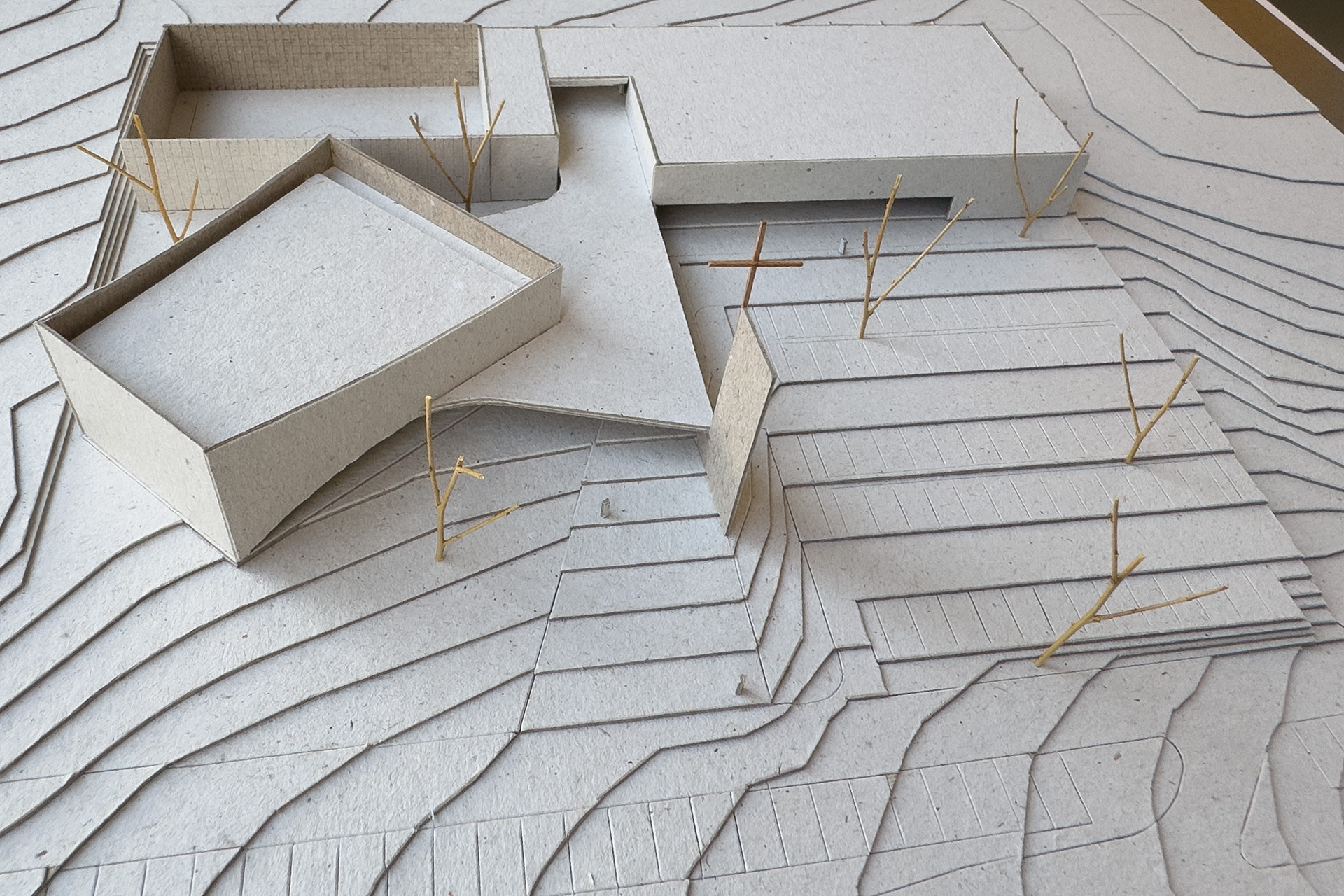
The proposed project for Semear Presbyterian Church will be developed in Brasília, Federal District, on a site located in the Noroeste neighborhood. The plot has a rectangular shape, measuring 93.75 m by 74.05 m, with its main access provided from the eastern frontage—the longest side of the site—via the neighborhood’s marginal road.
The building program includes a main worship space with a seating capacity of 800 people, complementary facilities dedicated to community activities—including a fellowship hall, children’s ministry area, classrooms, pastoral offices, administrative spaces, a library, restrooms, and support facilities—as well as a multi-sports court. The program also incorporates a parking area with 70 spaces, designed in accordance with local urban regulations.
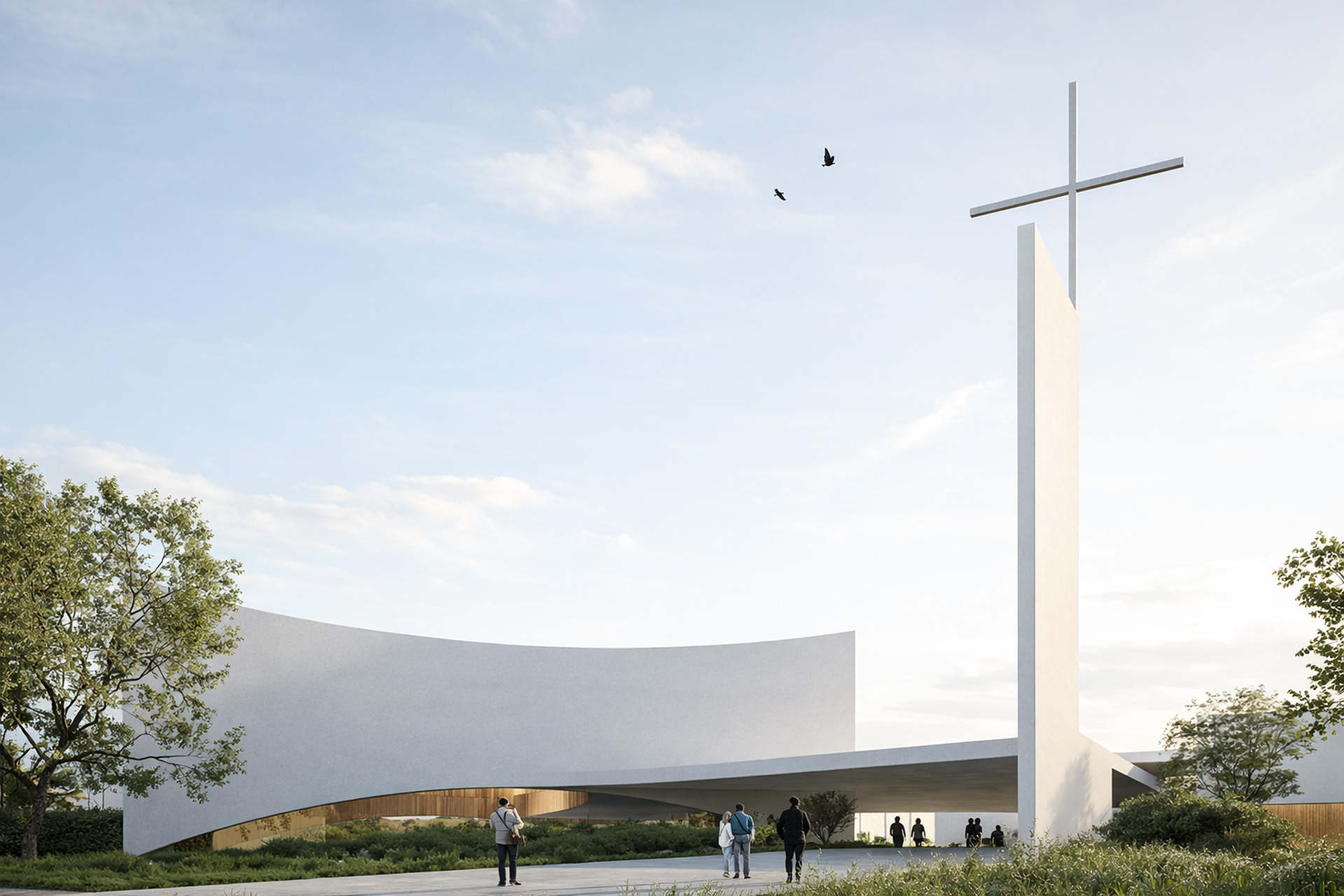
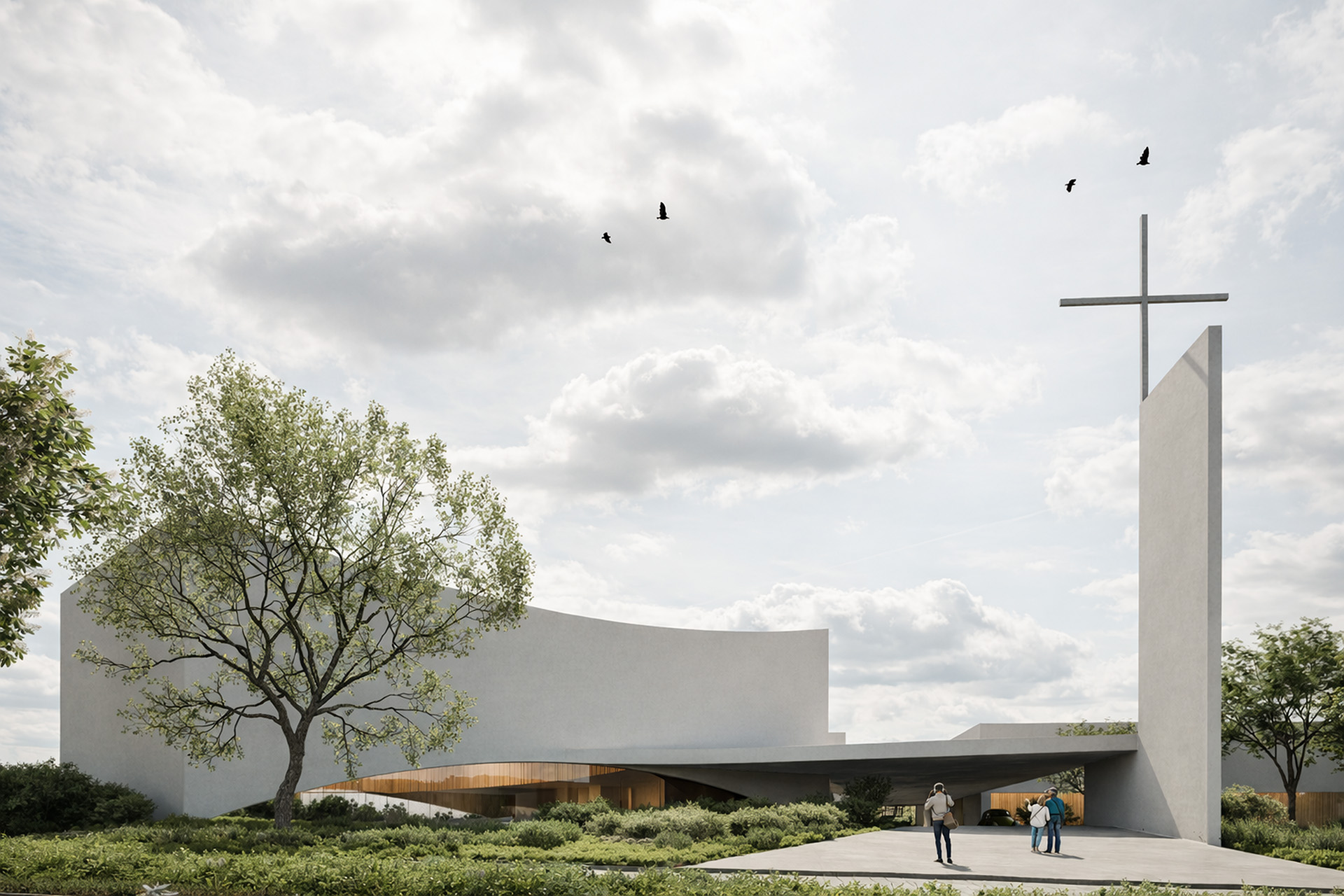
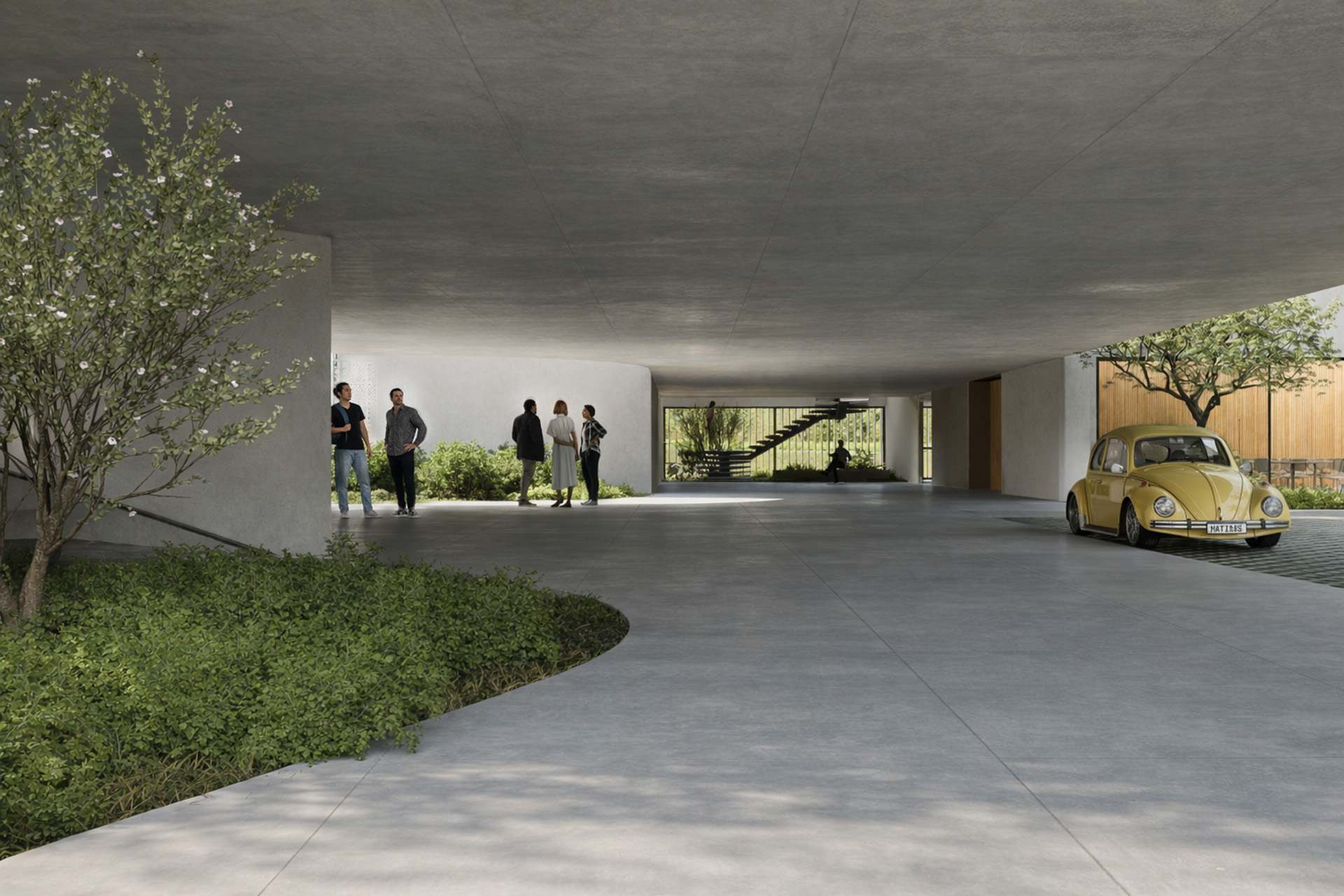
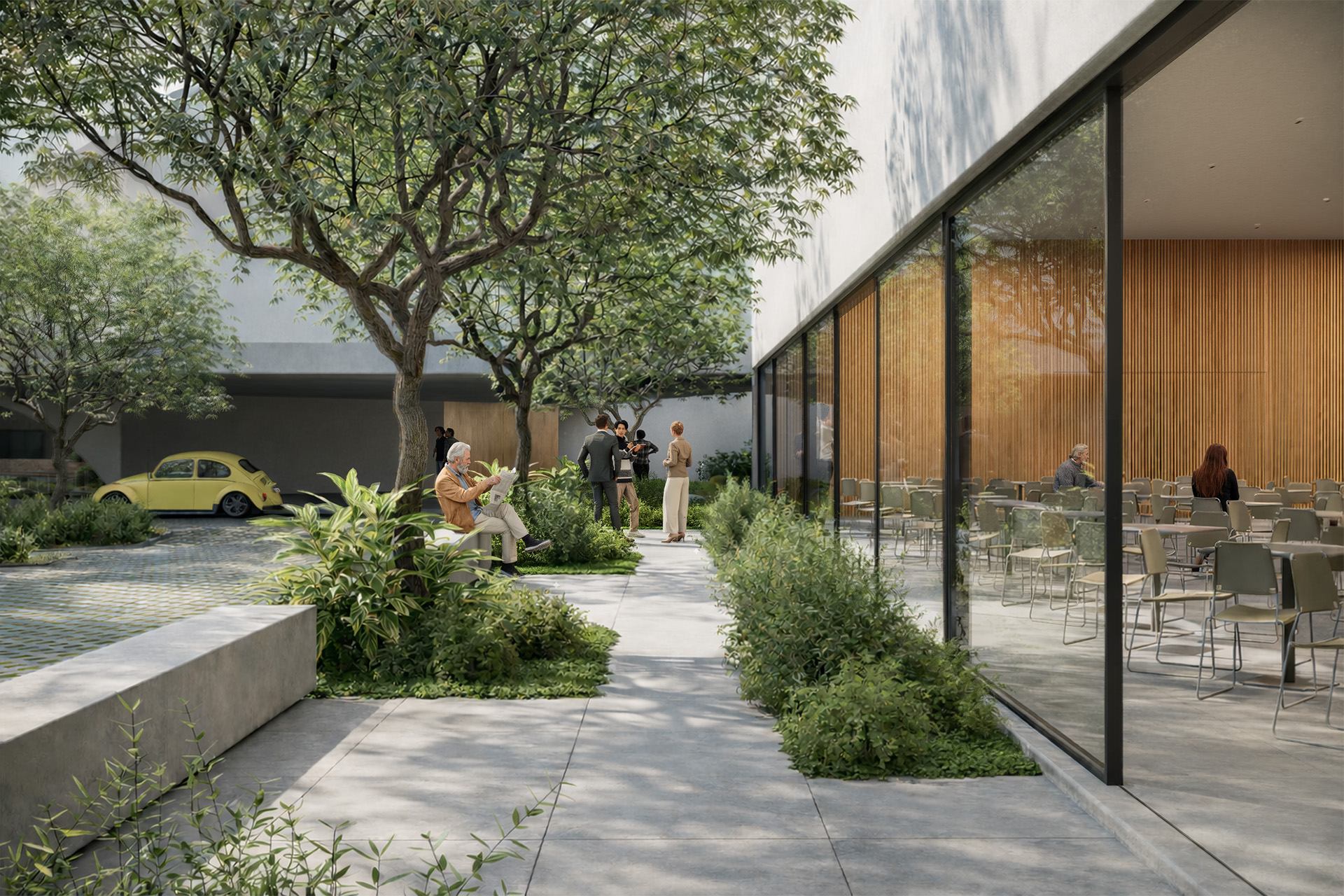
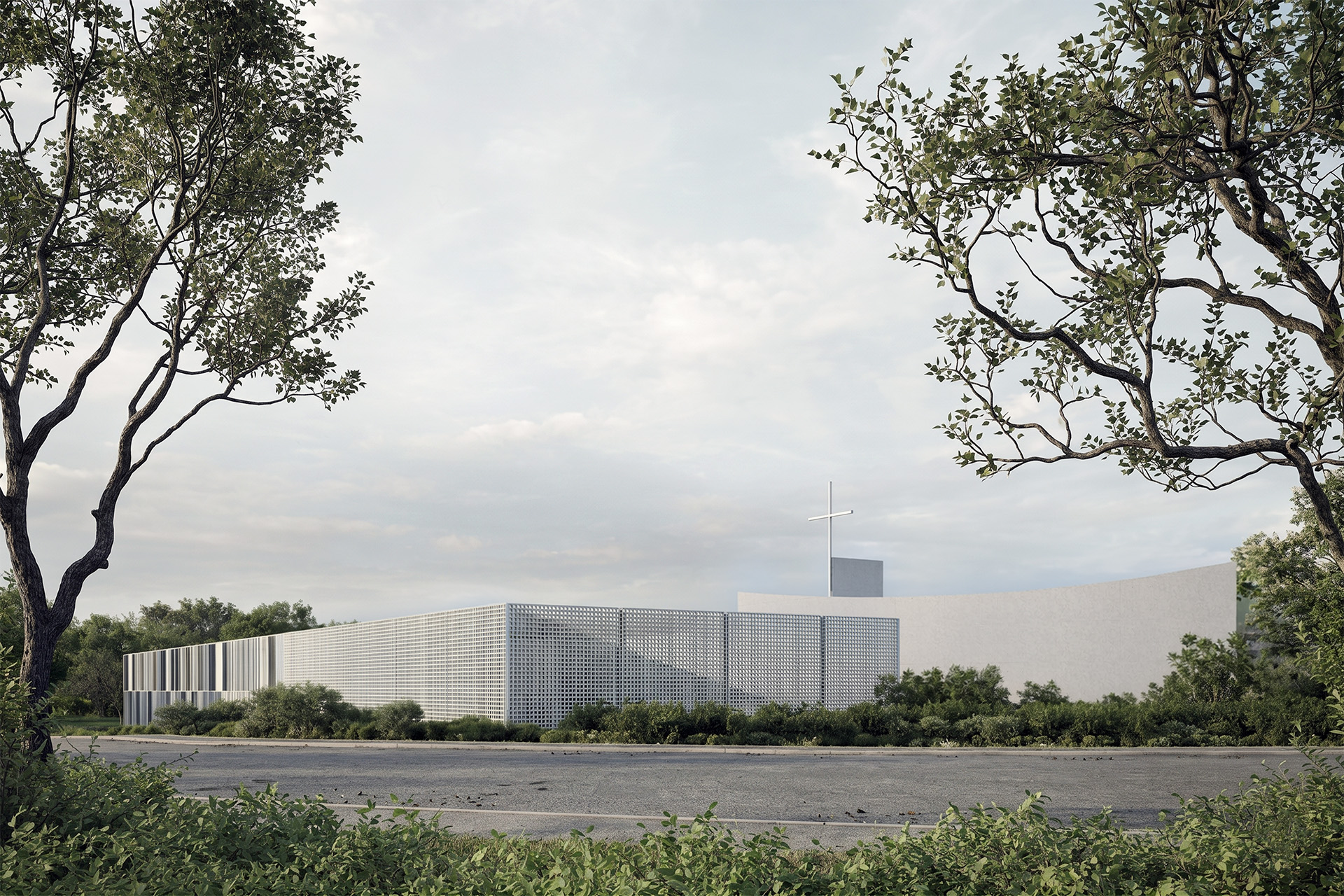
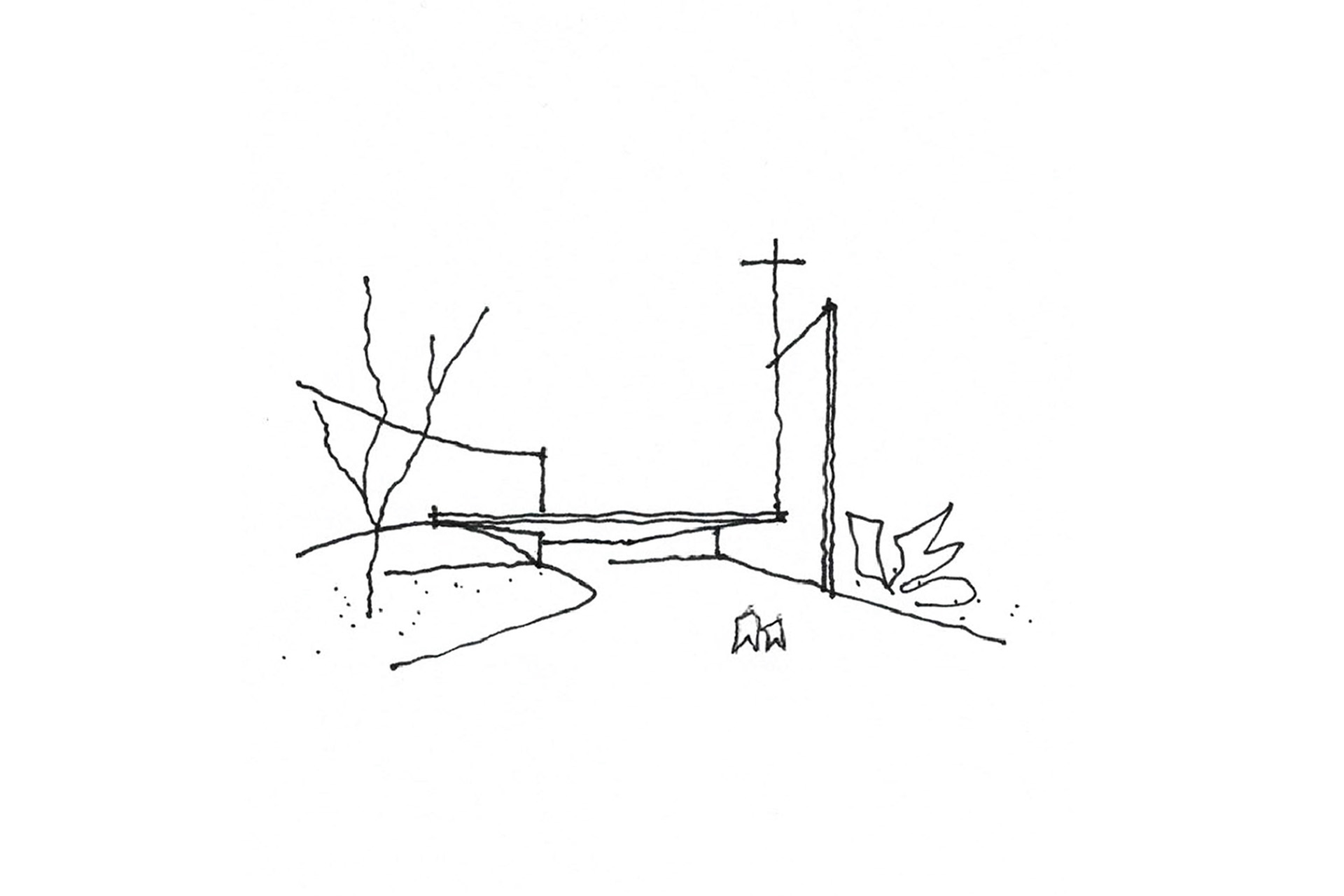
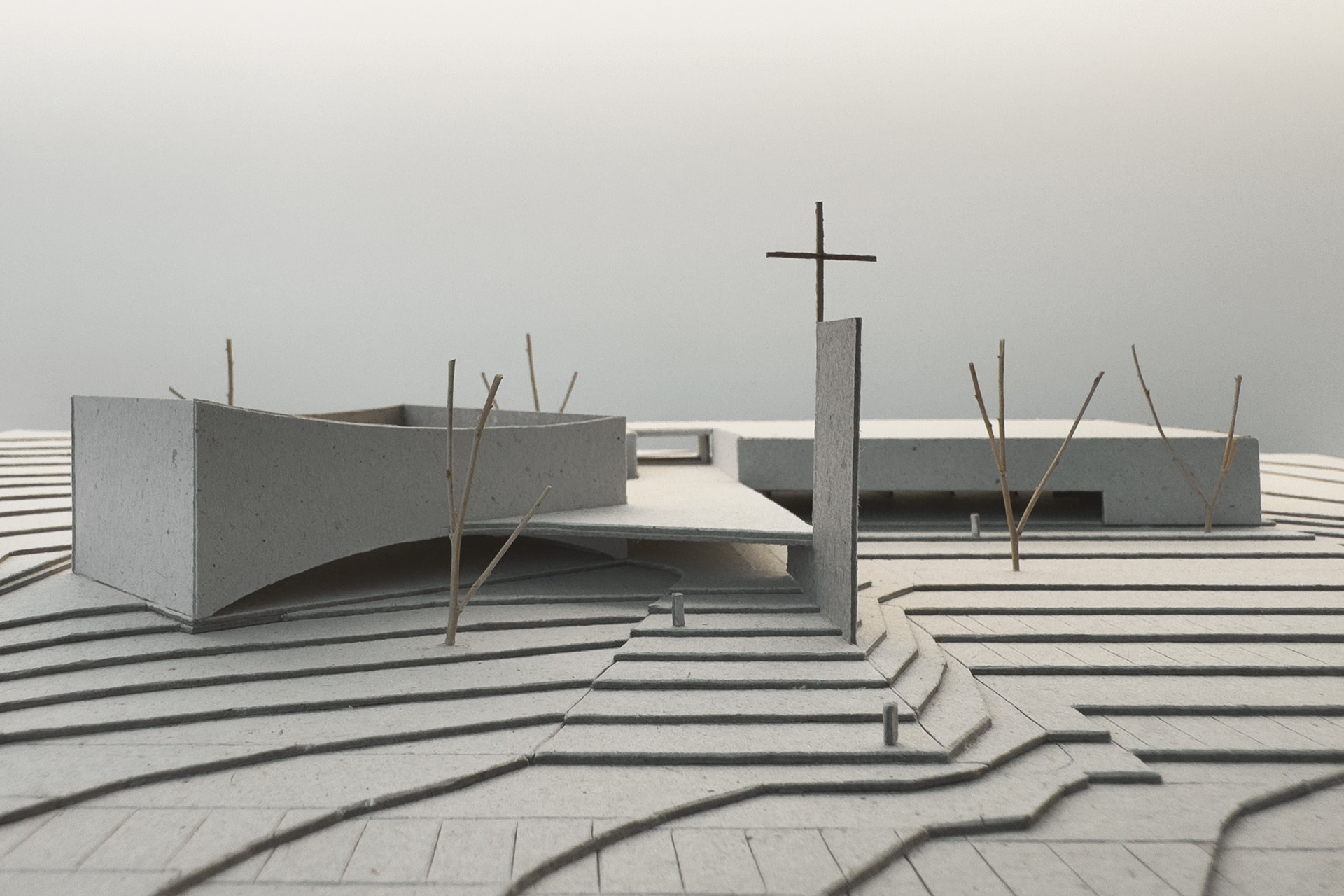
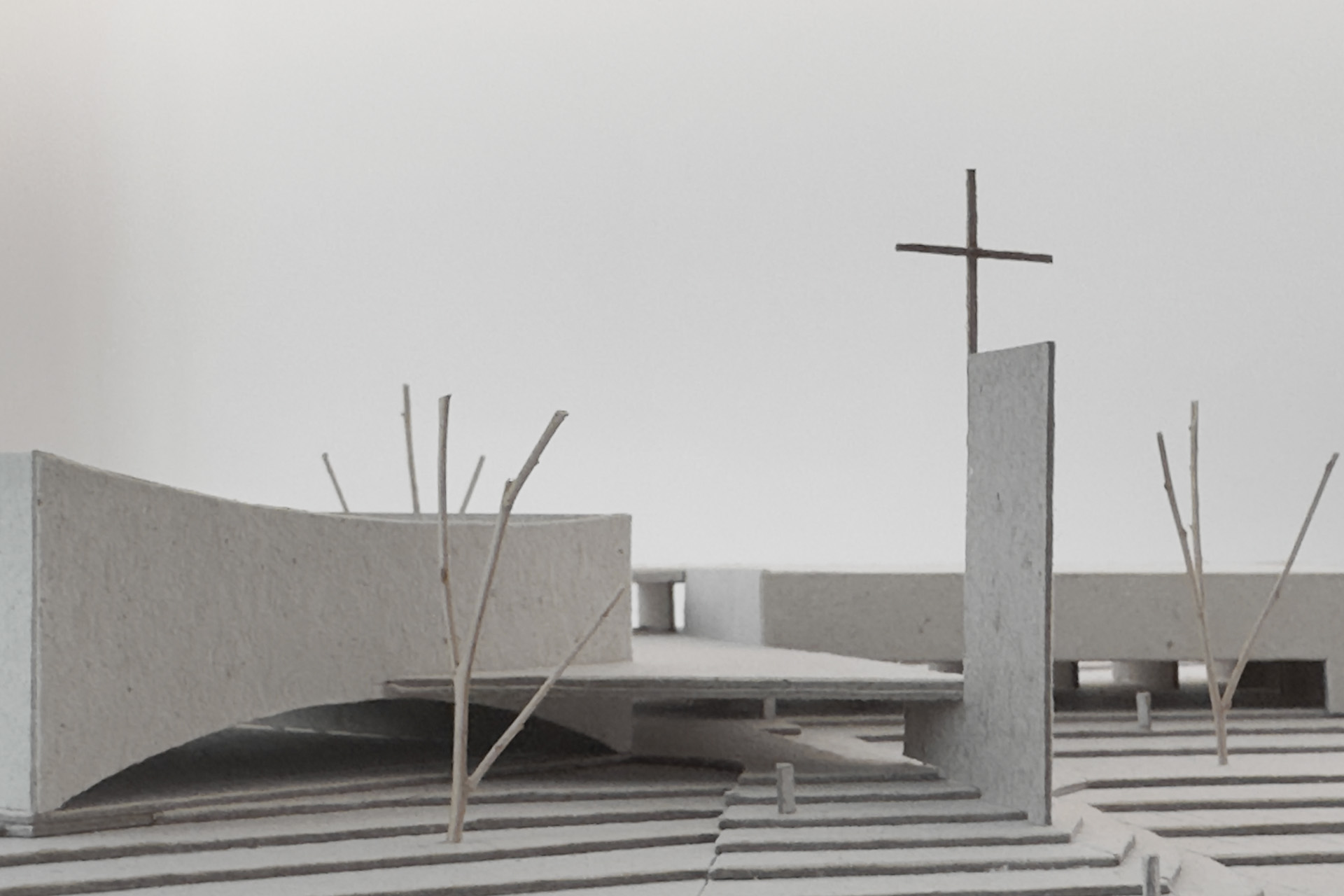
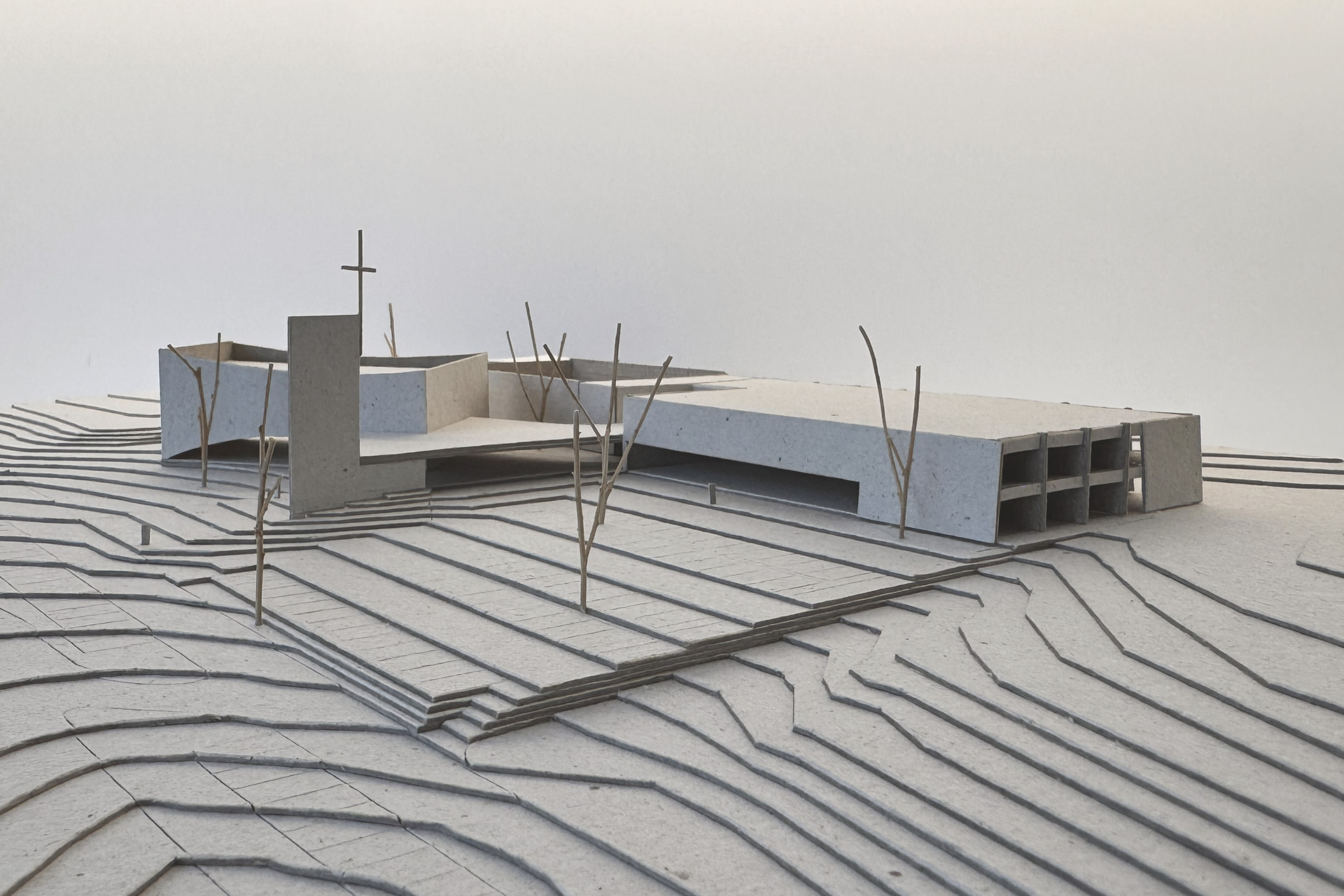
The site planning strategy is based on the organization of the program into two distinct buildings: the sanctuary, dedicated to religious services, and the community pavilion, intended for support, educational, and social activities. In addition to these two buildings, the architectural ensemble is composed of a large connecting canopy that links the structures, forming a kind of open-air foyer integrated with the surrounding landscaped areas, as well as a prominent vertical landmark: a tower crowned by a Christian cross.
The main entrance sequence is defined by the presence of the tower and the sanctuary, articulated through the expansive canopy. Along this route, visitors are guided toward the open foyer—conceived as a transitional space between the city and the religious environment—from which access is provided both to the sanctuary and to the community pavilion, located at the rear portion of the site.
Conceived as an urban landmark and a wayfinding element within the landscape, the tower reinforces the presence of the complex at the scale of the city. At its highest point, the cross establishes a discreet symbolic gesture associated with the institution’s religious tradition and identity.
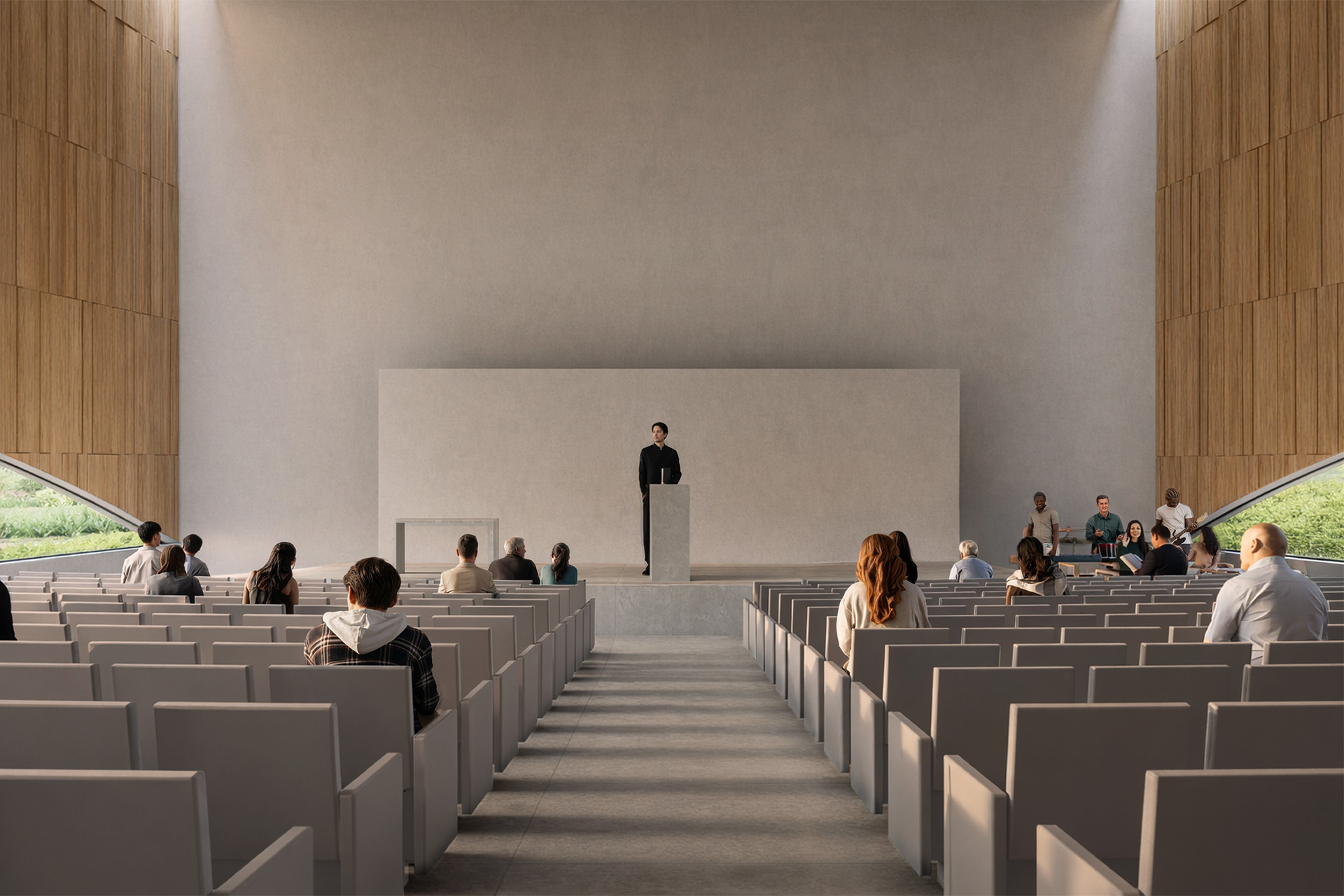
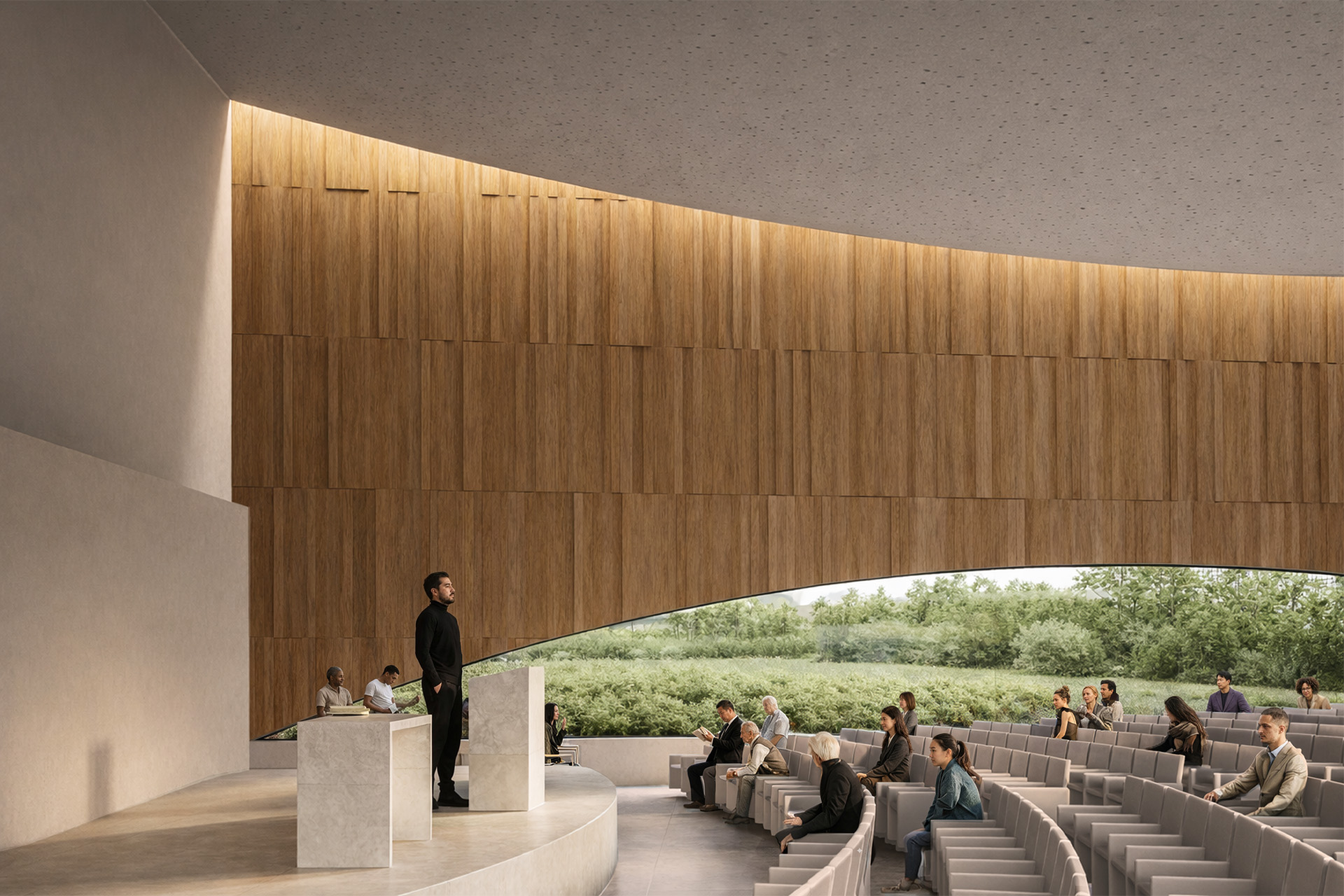
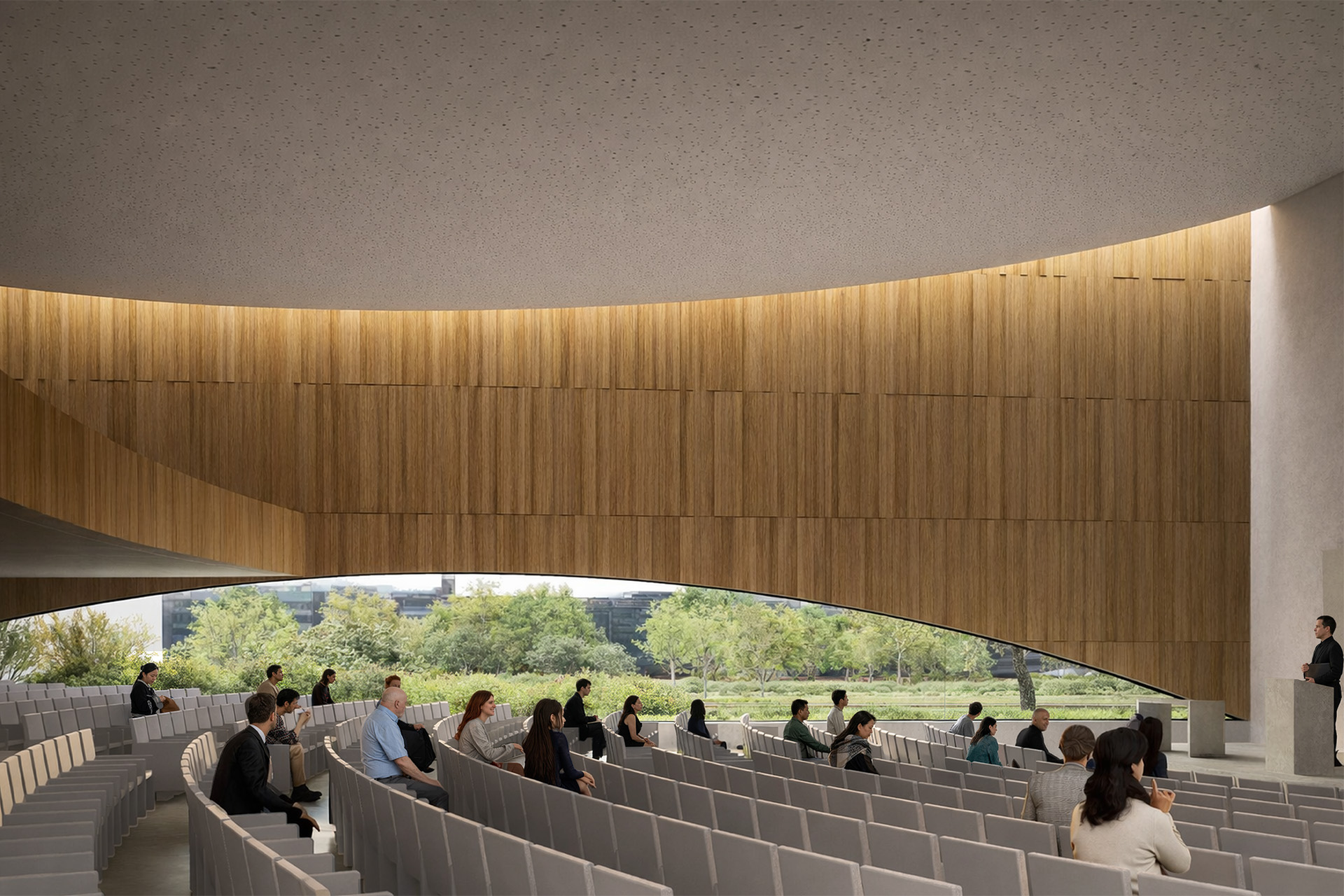
The sanctuary’s trapezoidal geometry is characterized by two arched voids—one located near the roof and the other at ground level. The upper opening, accompanied internally by the curved ceiling surface, creates a space that expands vertically toward the altar, emphasizing its central role within the liturgical setting. The lower opening forms a large aperture facing the gardens, establishing a direct visual relationship between the sanctuary’s interior and the immediate surrounding landscape.
The interior atmosphere is further enhanced by two upper sources of natural light, through which daylight washes over the interior wooden panels and accentuates the curvature of the ceiling. The presence of natural light and the constant visual connection with the landscape contribute to the contemplative character envisioned for the space.
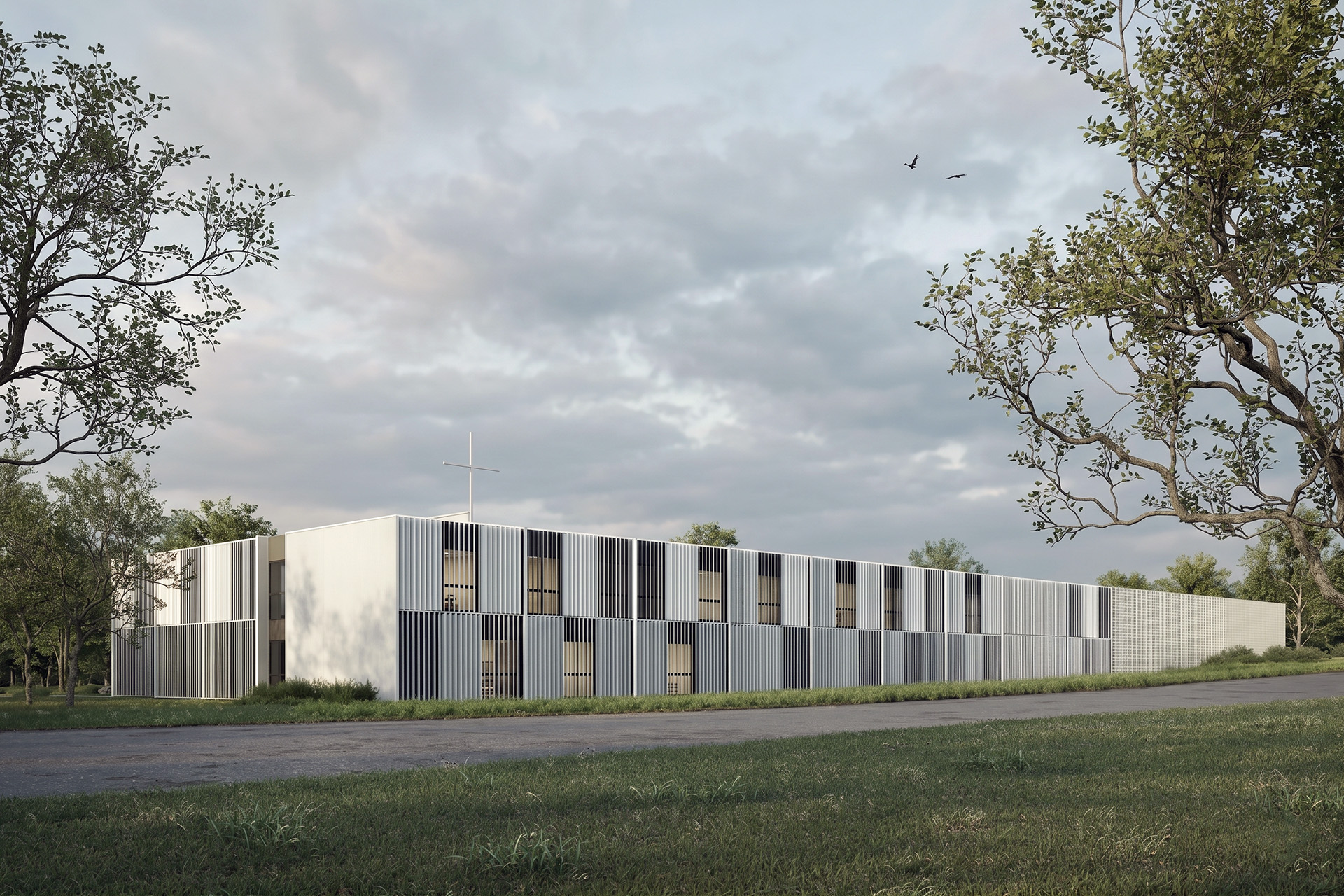
The community pavilion accommodates the social, recreational, and educational activities of the congregation, including sports, Christian education classes for children, youth, and adults, social gatherings and celebrations, as well as pastoral, administrative, and community support functions.
Within the architectural composition, the pavilion acts as a supporting element, preserving the sanctuary and the tower as the primary reference points of the ensemble.pavilion façades incorporate architectural elements such as cobogós and brise-soleils which, in addition to meeting privacy and environmental comfort requirements, establish a dialogue with Brasília’s modern architectural heritage.
References to the architecture that shaped the construction of Brasília are not limited to the community pavilion. They are also present in the arches that define the sanctuary’s geometry and in the open foyer that articulates the buildings, conceived as an intermediate space between the city and the architecture itself. Through the reinterpretation of these elements, the project seeks to establish a contemporary dialogue with the city’s architectural memory.
Datasheet
Project: 2026 – 2027
Building area: 3.400m²
Location: Noroeste, Brasília/DF
Authors: Arq. Eder Alencar, Arq. André Velloso
Architects: Arq. Marcela Peres Chagas e Arq. Victor Itonaga
Interns: Lucas Ferro, Laila Ollaik, Pedro Reis, Jusciel Cruz